BIG TWO-HEARTED RIVER (PT 2) by ERNEST HEMINGWAY
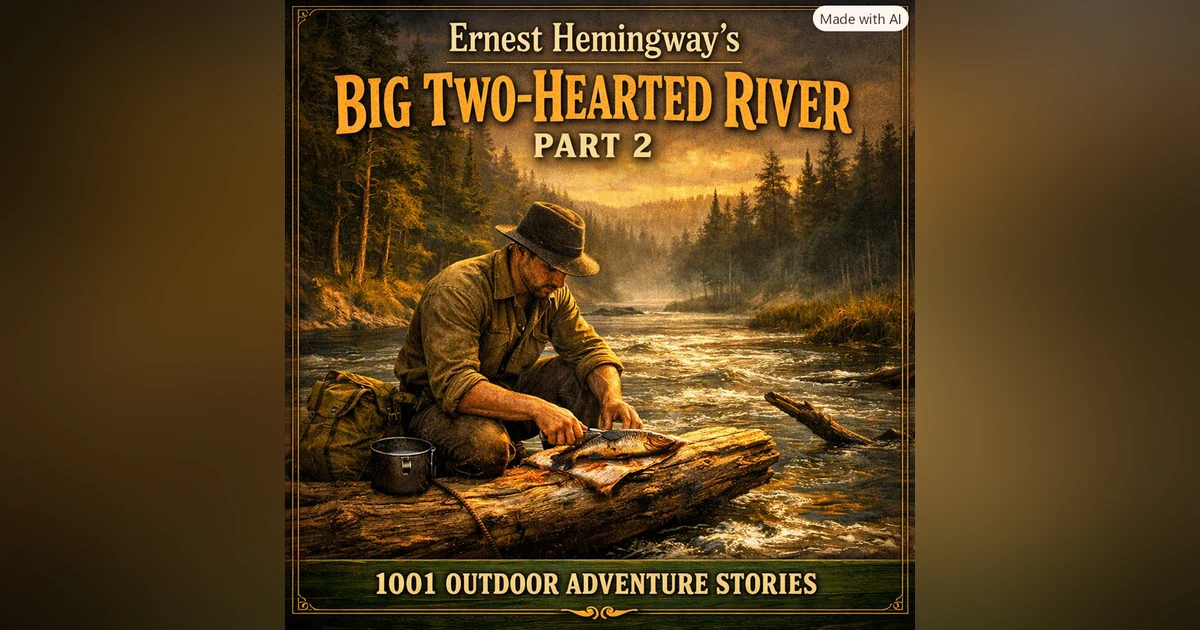


Ernest Hemingway's Big Two‑Hearted River stands as one of the most important stories in American outdoor literature — not because of grand events, but because of its quiet, deliberate simplicity. In Part Two, as Nick Adams moves deeper into the river, testing himself against the current, the weeds, the deep channels, and finally the heavy trout he lands and cleans on the log, we see the full shape of Hemingway's early genius.
This story marked a turning point in Hemingway's rise. Critics immediately recognized that he was doing something new — stripping away ornament, letting the landscape speak, and revealing emotion through action rather than explanation. Nick's careful movements, his respect for the river, his decision not to push into the dark swamp, all carry meaning. They show a man rebuilding himself, choosing control over chaos, choosing life over despair.
Hemingway's famous "iceberg theory" is alive in every line: the surface is fishing, but beneath it is recovery, trauma, restraint, and the quiet rebuilding of a soul. Big Two‑Hearted River helped establish Hemingway as a major voice of his generation — a writer who understood that the wilderness could heal, challenge, and reveal truths no conversation ever could.
And that's why this story endures. It's not just about trout. It's about coming back to yourself.
Many more great 1001 Outdoor Adventure Stories are on the way — from Zane Grey, Stephen Crane, Herman Melville, Robert Louis Stevenson, and others


