MESSAGE FOUND IN A BOTTLE by EDGAR ALLAN POE
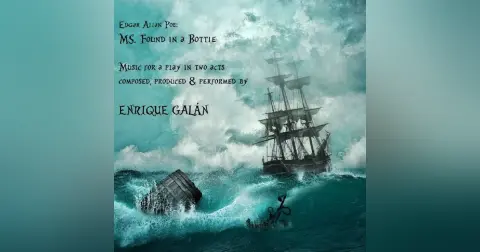


SHOW NOTES — MS. FOUND IN A BOTTLE by Edgar Allan Poe
1001 Classic Short Stories & Tales
Episode Summary
In this early sea‑tale from Edgar Allan Poe—first published in 1833 and winner of a Baltimore literary contest—we follow an unnamed narrator whose voyage from Java becomes a descent into terror, isolation, and the unknown. After a catastrophic storm destroys his ship, he and an old Swede survive adrift for days, only to encounter a massive, ghostly vessel crewed by ancient mariners who seem unaware of his presence. As the ship pushes toward the Antarctic and into a monstrous whirlpool, the narrator records his final thoughts, seals them in a bottle, and casts them into the sea—creating the “manuscript” we, the readers, are supposedly discovering.
Key Themes & Motifs
1. The Unreliable Narrator
Poe frames the story with a narrator who insists on his rationality and methodical mind, distancing himself from superstition. This insistence—common in Poe’s fiction—ironically heightens the uncanny nature of what follows.
2. Isolation at Sea
The sea becomes a Gothic landscape: vast, empty, and hostile. The narrator’s solitude intensifies as he boards the mysterious black ship whose crew neither sees nor hears him. The setting shifts the Gothic tradition from haunted houses to the boundless ocean.
3. The Unknown & the Sublime
The ancient ship, its porous timbers, its decrepit crew, and its silent voyage toward the South Pole evoke both awe and dread. Poe blends nautical realism with supernatural suggestion, creating a story that Joseph Conrad later praised for its authenticity and poetic imagination.
4. Fate & Doom
The whirlpool—an image Poe would revisit in A Descent into the Maelström—symbolizes inevitable destruction. The narrator’s final act of writing and casting his manuscript into the sea underscores the theme of doomed testimony: a voice preserved only by chance.
Plot Highlights
-
Departure from Java: The narrator boards a merchant vessel carrying cotton, cocoa-nuts, and opium.
-
The Simoon: A strange cloud and oppressive humidity foreshadow a violent storm that capsizes the ship.
-
Survival: Only the narrator and an old Swede remain alive as the shattered vessel drifts for days.
-
The Black Ship: A gigantic, ancient vessel appears during a second storm; the narrator is thrown aboard.
-
Ghostly Crew: The mariners speak an unknown language and seem oblivious to the narrator’s presence.
-
Discovery: A chance incident reveals the word DISCOVERY on a sail, prompting the narrator to examine the ship more closely.
-
Final Descent: As the ship is drawn into a massive whirlpool near Antarctica, the narrator writes his manuscript and casts it into the sea.
Why This Story Matters
MS. Found in a Bottle is one of Poe’s earliest breakthroughs—an award-winning tale that helped launch his literary career. It showcases his emerging mastery of atmosphere, psychological tension, and the blending of realism with the supernatural. It also anticipates later nautical classics, influencing writers such as Herman Melville and Joseph Conrad.
Suggested Episode Structure
-
Intro (2–3 minutes): Poe’s early career, the contest win, and the story’s significance.
-
Reading of the Story: Full narration.
-
Post‑Show Commentary:
-
Poe’s fascination with storms, isolation, and doomed narrators
-
The story’s place in early American Gothic literature
-
Connections to A Descent into the Maelström and later sea fiction
-
Listener Takeaways
-
Poe’s sea stories are as atmospheric and psychologically rich as his Gothic tales.
-
The “manuscript in a bottle” device creates a powerful sense of immediacy and fatalism.
-
The story remains a compelling blend of nautical adventure and supernatural mystery.