April 19, 2026
THE LAGOON by JOSEPH CONRAD
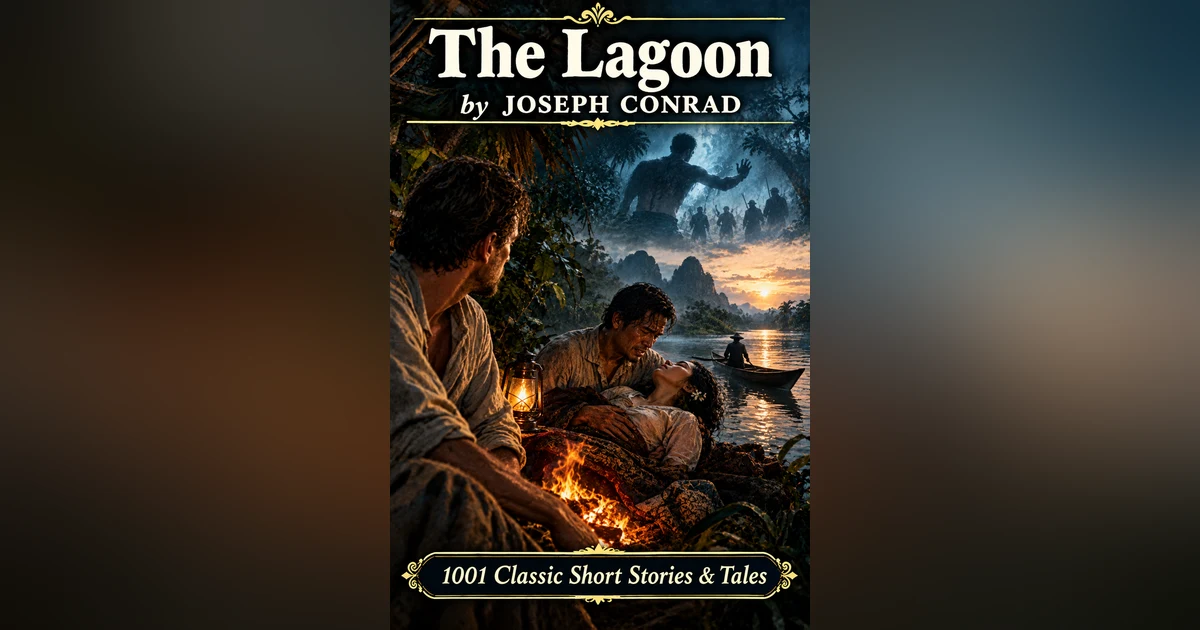



Episode Summary: "The Lagoon" by Joseph Conrad
In this haunting tale of "impulsive betrayal and permanent remorse", a white traveler known only as Tuan journeys through the dense, tropical waterways of the Malay Archipelago. He stops for the night at the isolated jungle clearing of an old friend, Arsat, only to find the man in the throes of a double tragedy. Arsat’s beloved, Diamelen, lies dying of a fever, and her impending end forces Arsat to confess the dark secret of how they came to be there.
Study.com +5
By the flickering light of a fire, Arsat recounts a harrowing escape from years prior: how he and his brother kidnapped Diamelen from a powerful Rajah. When their pursuers closed in, Arsat’s brother stayed behind to hold them off, sacrificing himself so the lovers could reach their canoe. In a moment of fatal choice, Arsat pushed off into the water, ignoring his brother’s desperate cries for help in order to save himself and his love. As the sun rises and Diamelen breathes her last, Arsat is left in a "world of illusion", finally resolving to return to the river to avenge his brother and face his own destiny.
Study.com +2
Why This Story Is a Classic
- Mastery of Atmosphere: Conrad uses lush, "dreamlike and surreal" prose to create a setting that is as much a psychological landscape as a physical one. The stagnant lagoon serves as a powerful symbol of Arsat’s moral isolation and the "immobility" of his guilt.
- The Weight of Moral Ambiguity: Typical of Joseph Conrad's work, the story avoids easy answers. It explores the "ethical ambiguity of life" by pitting the noble virtue of love against the sacred bond of loyalty to one's kin.
- A Forerunner of Modernism: Published in 1897, "The Lagoon" is an early experiment in Conrad's complex narrative techniques. Its "story within a story" structure and focus on internal human struggle helped bridge the gap between 19th-century adventure and 20th-century psychological modernism.
- Universal Themes: While the colonial setting reflects the era of its writing, the core themes—remorse, the consequences of cowardice, and the search for redemption—remain timeless.
Rupkatha Journal on Interdisciplinary Studies in Humanities +10