DR. HEIDIGGER'S EXPERIMENT by NATHANIEL HAWTHORNE
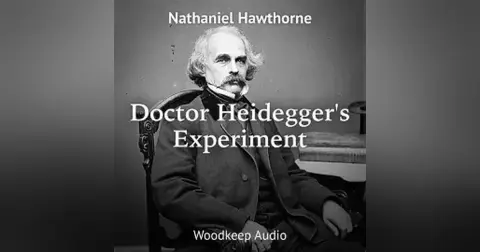


🎙️ SHOW NOTES — Dr. Heidegger’s Experiment by Nathaniel Hawthorne at 1001 Classic Short Stories & Tales
(also check out new arrivsls at 1001 Stories From The Gilded Age)
Website: www.bestof1001stories.com
In this quietly unsettling tale, Nathaniel Hawthorne invites us into the dim, antiquated study of Dr. Heidegger — a physician whose reputation is equal parts wisdom, eccentricity, and whispered rumor. When he summons four elderly acquaintances to witness a strange demonstration, the group expects a harmless curiosity. What they receive instead is a chance — or what appears to be a chance — to reclaim their lost youth.
As the doctor unveils a mysterious liquid said to possess rejuvenating powers, Hawthorne shifts the focus away from the supernatural and toward something far more human: whether people truly change when given a second chance. The experiment becomes a mirror, reflecting vanity, folly, and the patterns that shape a lifetime.
This is a story about temptation, self‑deception, and the uneasy truth that age may alter the body, but character is far harder to transform. Hawthorne delivers it with his signature blend of gothic atmosphere, moral inquiry, and a touch of dark humor — leaving listeners with a question that lingers long after the final line.
⭐ Themes & Highlights
-
The tension between youthful desire and hard‑earned wisdom
-
Hawthorne’s fascination with moral testing and the persistence of human flaws
-
A gothic setting that feels almost like a character in itself
-
A story that asks whether experience truly teaches — or merely repeats
🕯️ What Inspired Hawthorne to Write This Story
While Hawthorne left no single definitive explanation for Dr. Heidegger’s Experiment, the story fits squarely within several of his lifelong obsessions:
1. The Moral Legacy of Puritan New England
Hawthorne grew up in the shadow of Puritan history — a culture deeply concerned with sin, repentance, and the possibility (or impossibility) of moral change. This story echoes that heritage: a controlled “test” of human nature, with the doctor acting almost like a moral examiner.
2. Skepticism About Human Perfectibility
Hawthorne was wary of the 19th‑century American belief that people could be perfected through reform movements, self‑improvement, or scientific progress. The experiment becomes a parable: even when circumstances change, character may not.
3. The Rise of Pseudoscience and “Miracle Cures”
During Hawthorne’s lifetime, America was full of traveling elixir salesmen, mesmerists, and medical showmen. The “fountain of youth” motif allowed him to poke at society’s fascination with quick fixes and miraculous transformations.
4. Hawthorne’s Personal Preoccupation with Human Weakness
Many of his stories — The Birth‑Mark, Rappaccini’s Daughter, Young Goodman Brown — revolve around experiments, tests, or moral trials. He was fascinated by the idea that people reveal their true selves when placed under pressure.
5. A Literary Nod to Classical and Folkloric “Youth Restored” Tales
Legends of rejuvenating waters appear in Greek myth, medieval lore, and early American storytelling. Hawthorne uses the familiar trope but twists it into a psychological study rather than a fantasy.
🎧 Why This Story Still Resonates
Hawthorne’s question is timeless: If we were given back our youth, would we use it any better?