Categories
Stories - Narrated by Jon
Listen to stories narrated by none other than Jon himself! Giving his own personal touch to each story making it come alive like never before!
Ghost Stories Radio
"Ghost Stories" can refer to various forms of audio entertainment, including podcasts and old-time radio shows that focus on paranormal and supernatural tales. Many podcasts specialize in real-life ghost stories, while classic radio dramas often featured spooky narratives.
Chiller Stories Radio
Make sure the door is locked, the nightlight is on, and you know where everyone in the house is! These stories remind you of what goes bump in the night!
Lovecraft Stories-Narrated by Jon
H.P. Lovecraft is renowned for his distinctive brand of horror, often termed cosmic horror, which centers on the insignificance of humanity in the face of vast, ancient, and malevolent cosmic entities. Some of his most famous stories include "The Call of Cthulhu", "At the Mountains of Madness", "The Shadow Over Innsmouth", and "The Dunwich Horror". These stories frequently explore themes of the unknown, madness, and the terrifying consequences of encountering the otherworldly.
The Black Museum - Orson Welles
The Black Museum is a radio crime-drama program produced by Harry Alan Towers, which was broadcast in the USA on the Mutual network in 1952. It was then broadcast in Europe in 1953 on Radio Luxembourg, a commercial radio station, and was not broadcast by the BBC until 1991.
Theater 10:30 Radio Drama
"Theatre 10:30" is a collection of old-time radio drama episodes, primarily known for their horror, fantasy, and mystery stories. The series was produced by CBC Radio between 1968 and 1971. Many of the episodes are adaptations of classic short stories and novels by authors like E.F. Benson, Ray Bradbury, and W.W. Jacobs.
Lights Out Radio
Lights Out is an American old-time radio program devoted mostly to horror and the supernatural. Created by Wyllis Cooper and then eventually taken over by Arch Oboler, versions of Lights Out aired on different networks, at various times, from January 3, 1934 to the summer of 1947 and the series eventually made the transition to television. Lights Out was one of the earliest radio horror programs, predating Suspense and Inner Sanctum, and was the first to gain a large following. In late 1933, NBC writer Wyllis Cooper conceived the idea of "a midnight mystery serial to catch the attention of the listeners at the witching hour". The idea was to offer listeners a dramatic program late at night, at a time when the competition was mostly airing music. Though there had been efforts at horror on radio previously (notably The Witch's Tale), there does not seem to have been anything quite as explicit or outrageous as this on a regular basis.
CBS Mystery Theater Radio
In 1974 long-time radio producer Himan Brown convinced CBS to green-light a new anthology of Radio Dramas, CBS Radio Mystery Theater (CBSRMT). Radio Drama had been declared "dead" twelve years before. CBS Radio Mystery Theater was meant to appeal to an audience that remembered when old time radio drama was a popular form of family entertainment. Riding on the wave of nostalgia fever, the radio show attracted many younger listeners who would stay up late, hidden under their covers to hear the program on their bedroom radio (and many of them were not able to go to sleep after listening to the frightening program!) Listen here to remember those stories!

True Accounts
Sit back and listen to the chilling stories that one would not think to be true....be really is.
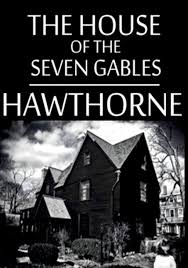
Nathaniel Hawthorne’s "The House of the Seven Gables,"
The House of the Seven Gables: A Romance is a Gothic novel written beginning in mid-1850 by American author Nathaniel Hawthorne and published in April 1851 by Ticknor and Fields of Boston. The novel follows a New England family and their ancestral home. In the book, Hawthorne explores themes of guilt, retribution, and atonement, and colors the tale with suggestions of the supernatural and witchcraft. The setting for the book was inspired by the Turner-Ingersoll Mansion, a gabled house in Salem, Massachusetts, belonging to Hawthorne's cousin Susanna Ingersoll, as well as ancestors of Hawthorne who had played a part in the Salem Witch Trials of 1692. The book was well received upon publication and has been adapted several times to film and television.
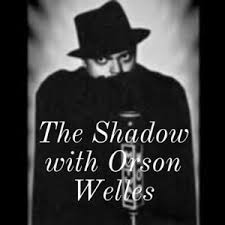
The Shadow: The Complete Adventures
The Shadow is a fictional character created by American magazine publishers Street & Smith and writer Walter B. Gibson. Originally created to be a mysterious radio-show narrator and developed into a distinct literary character in 1931 by Gibson, the Shadow has been adapted into other media, including American comic books, comic strips, serials, video games, and at least five feature films. The radio drama included episodes voiced by Orson Welles.