
BETRAYAL ON THE THAMES: THE FINAL DAYS OF POCAHONTAS
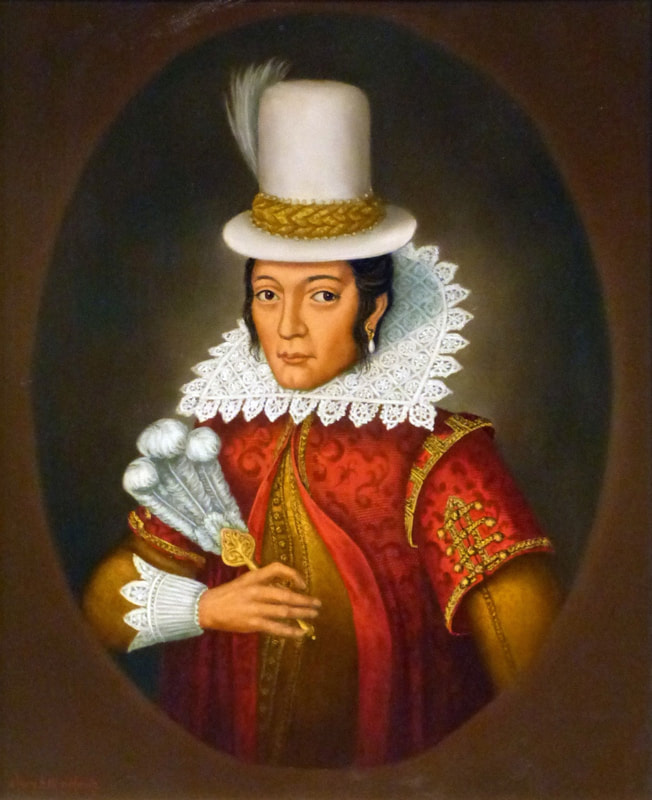
Todays story explains the controversy which still surrounds the untimely death of 21 year-old Pocahonts, the daughter of a Powhatan chief who, thanks to her trust in Capt. John Smith and willingness to accept English presence in the New World, became a pawn of English colonialism and, according to her tribe's oral tradition, was likely killed for her kindness when she was poisoned while on board a ship leaving Engaland ihn March of 1617- the same ship and Captain which had kidnapped her just a few years earlier to "christianize" her.
Our storyline today: 1616 Pocahontas, with husband JohnRolfe and son Thomas, reach England on a mission to promote the English/Native Indian alliance in the New World and hopefully raise money for a new church and school for native peoples.
Pocahontas and 12 of her tribe attached to the delegation tour London! Pocahontas ,now Lady Rebecca, is invited to attend a Chrisatmasplay and meets the King and Queen~Later she meets Capt.John Smith, who comes to see her, and she is initially overwhelmed due to her being told in Virgina thast Smith was dead- later she rebukes him for not contacting her~Likely treachery done by Smith's detractors the reason for his severe injury~Pocahontas works closely with Church ofn England officials to ask them to finance a vchurch and sachool for Indian children, idea which is acted upon~the funds raised during her visit went intio the construction of the Colle of Henrico (Richmond area) which was detroyed in 1622 by a Powhatan uprising- but later renewed at a diffent location- resulting in the beginnings of the College of William &n Mary in Williamsburg.
Then the sudden sickness and death with hours after boarding the ship which was wo take them home- she dies suddenly- some say smallpox?- not believed by historians- Mattaponi Oral tradition states that she told her sister that she has been poisoned~ suspects are Capt Argyll and even her husband- who may have been using her and her notoriety for his own gainThe primary research revealing Mattaponi oral traditions of treachery, poisoning, and sexual violence was conducted by Dr. Linwood "Little Bear" Custalow and Angela L. Daniel (also known as Silver Star). Their collaborative work resulted in the 2007 book, The True Story of Pocahontas: The Other Side of History, which published these sacred oral traditions for the first time.
Key Researchers & Contributors
Dr. Linwood "Little Bear" Custalow: A Mattaponi tribal historian and the eldest son of Chief Daniel Webster "Little Eagle" Custalow. He was designated from a young age to learn and preserve the tribe's sacred oral history.
Angela L. Daniel ("Silver Star"): A doctoral student in anthropology at the College of William and Mary at the time of publication. She worked closely with Dr. Custalow and his father, Chief Webster Custalow, who encouraged her to document their history to ensure its preservation.
Chief Webster "Little Eagle" Custalow: The late Mattaponi chief who served as a primary source for the researchers. He was instrumental in authorizing the public release of these historically guarded accounts.
Significant Findings of Their Research
Through their interviews and compilation of oral tradition, these researchers documented several accounts of English treachery:
Death by Poisoning: Their research indicates that Pocahontas was murdered by poisoning at a final dinner with John Rolfe and Captain Samuel Argall to prevent her from exposing English deceptions to her father.
Systemic Sexual Violence: They recorded clear tribal traditions stating Pocahontas was repeatedly abused during her captivity in Jamestown, specifically by Governor Thomas Dale.
Paternity of Thomas Rolfe: The oral history they documented asserts that her son Thomas was not John Rolfe’s child but was the result of physical abuse by Thomas Dale.
Exploitation of Tribal Members: They noted the tradition that Powhatan women accompanying Pocahontas were exploited, with some sold into servitude or slavery in Bermuda to remove witnesses to these events.
While these findings have been debated by conventional historians who rely on written colonial records, the work of Custalow and Daniel remains the authoritative source for the Mattaponi sacred oral history.