

TORNADO: REMEMBERING THE 2011 SUPER OUTBREAK & HOW TO SURVIVE THE NEXT ONE
1001 Heroes, Legends, Histories & Mysteries Podcast TORNADO: REMEMBERING THE 2011 SUPER OUTBREAK & HOW TO SURVIVE THE NESXT ONE
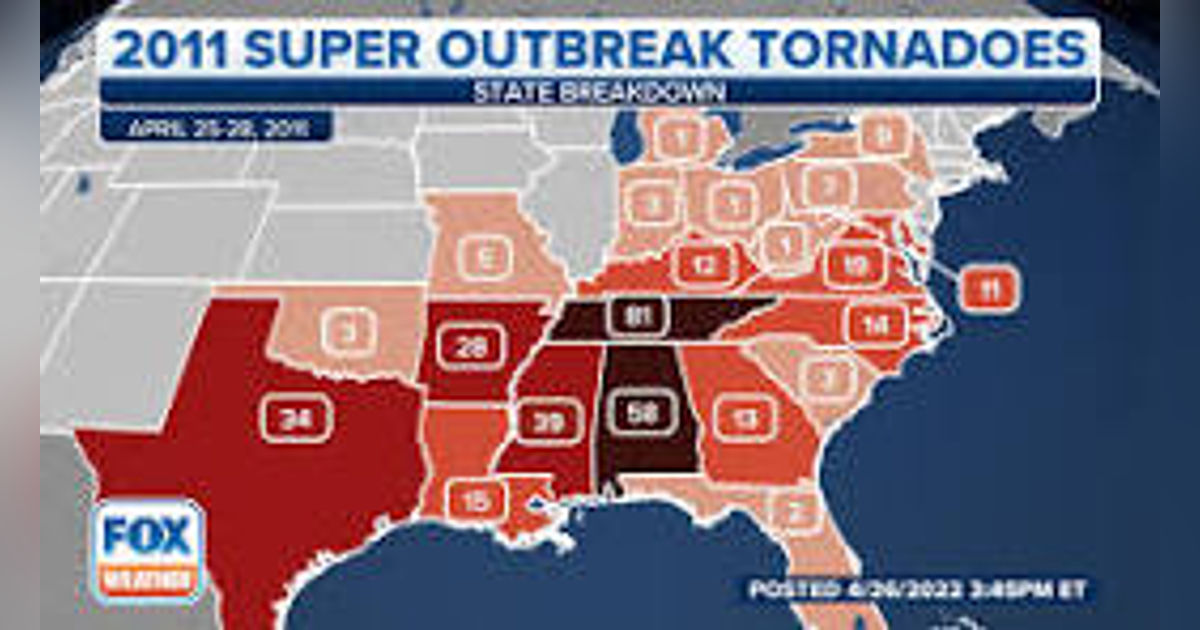
The 2011 Super Outbreak stands as the largest, deadliest, and most destructive tornado outbreak ever recorded in the United States, a four‑day onslaught of violent storms that carved a scar across the South, Midwest, and East from April 25–28, 2011. It was a meteorological event so vast and so violent that even seasoned forecasters struggled to describe it. Over those four days, the atmosphere produced 368 confirmed tornadoes, a record for a continuous outbreak, with 224 tornadoes touching down on April 27 alone, the most ever recorded in a single 24‑hour period.
A Perfect Storm of Atmospheric Ingredients
The outbreak was driven by a rare collision of weather systems: warm, moisture‑rich air surging north from the Gulf of Mexico; cold, dense air dropping from Canada; and a powerful jet stream sweeping across the central U.S. The resulting wind shear created ideal conditions for supercells—towering, rotating thunderstorms capable of producing long‑track, violent tornadoes. On April 27, these ingredients aligned with near‑perfect efficiency, spawning multiple EF4 and EF5 tornadoes across Alabama, Mississippi, Tennessee, and Georgia.
The Human Toll
The outbreak killed 324 people, with an additional 24 deaths from related hazards such as straight‑line winds, hail, and flash flooding—bringing the total to 348 fatalities. More than 3,100 people were injured. Alabama alone suffered 238 tornado‑related deaths, making it the hardest‑hit state. Entire neighborhoods were leveled, families were torn apart, and communities that had stood for generations were reduced to rubble in minutes.
The Cost in Property and Infrastructure
The destruction was staggering. The outbreak caused $10.2 billion in damage in 2011 dollars—equivalent to $14.6 billion today—making it the costliest tornado outbreak in U.S. history when adjusted for inflation. Homes, schools, hospitals, and businesses were obliterated. Critical infrastructure—power lines, water systems, communication networks—collapsed under the strain. Some towns, like Hackleburg, Alabama and Smithville, Mississippi, were nearly wiped off the map.
Record‑Setting Tornadoes
The 2011 Super Outbreak set or tied multiple records:
• Largest tornado outbreak ever recorded: 368 confirmed tornadoes across 21 states.
• Most tornadoes in a single day: 224 on April 27.
• Four EF5 tornadoes, including the catastrophic Hackleburg–Phil Campbell tornado with winds over 200 mph.
• One of the highest Destruction Potential Index (DPI) scores ever measured, reflecting the immense size and intensity of the tornadoes.
The EF5 tornadoes were especially devastating. These storms scoured pavement from roads, hurled vehicles like toys, and left behind damage so complete that entire blocks were reduced to bare foundations. In Tuscaloosa and Birmingham, Alabama, an EF4 tornado carved a deadly path through densely populated areas, leaving behind scenes of destruction that would become iconic images of the outbreak.
Communities Forever Changed
The outbreak’s impact extended far beyond the physical damage. Survivors described the storms as sounding like freight trains, jet engines, or explosions. Many had only seconds to take cover. In some cases, tornadoes struck so quickly and with such force that even well‑built homes and storm shelters offered little protection.
In the aftermath, communities rallied. Volunteers poured in from across the country. Churches, schools, and civic groups became relief centers. But the emotional toll lingered. Many survivors struggled with trauma, grief, and the daunting task of rebuilding their lives from the ground up.
Lessons Learned
Meteorologists and emergency managers studied the outbreak extensively. They found that:
• Warning systems worked, but the sheer number and intensity of tornadoes overwhelmed communities.
• Public complacency—the belief that “it won’t happen here”—contributed to fatalities.
• Better communication, especially through mobile alerts and social media, has since become a priority.
• Building codes in tornado‑prone regions have been reevaluated to improve structural resilience.
The outbreak also underscored the importance of preparedness. Even with modern forecasting, tornadoes can form and intensify rapidly. Having a plan—knowing where to shelter, how to receive warnings, and how to protect your family—can mean the difference between life and death.
A Storm Etched Into Memory
The 2011 Super Outbreak remains a defining moment in American weather history. It was a reminder of nature’s raw power and unpredictability, and of the resilience of the communities that faced it. For many, the scars—both physical and emotional—are still visible. But so too is the determination to rebuild, remember, and prepare for whatever comes next.
As we look back on the outbreak in this episode of 1001 Heroes, Legends, Histories & Mysteries, we honor the lives lost, the heroes who emerged, and the lessons learned.