THE LINDBERGH NURSEMAID TRIAL-THE OTHER SUSPECT-VIOLET SHARPE


 RSS Feed
1001 TRUE CRIME FROM ANOTHER TIME
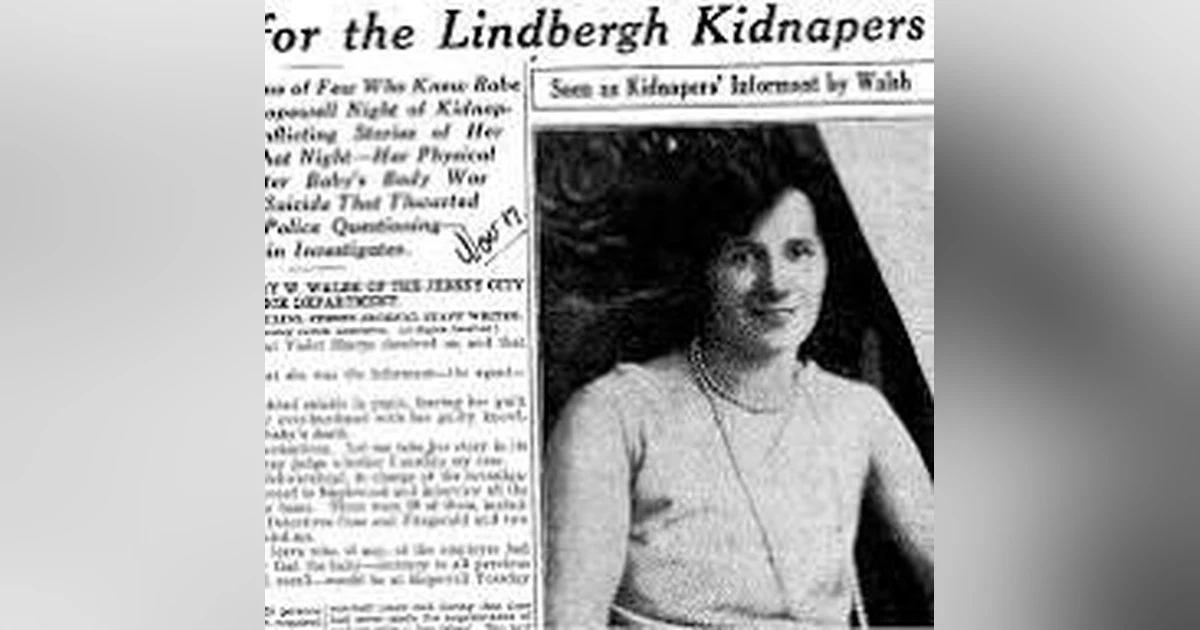
THE LINDBERGH NURSEMAID TRIAL: THE OTHER SUSPECT — VIOLET SHARPE (1932–1936)
SHOW NOTES
Episode Summary: In the wake of the 1932 Lindbergh baby kidnapping, the world focused on ransom notes, ladders, mob intermediaries, and the frantic hunt for a culprit. But behind the headlines, behind the Hopewell estate, behind the public grief of Charles and Anne Lindbergh, there was another story unfolding — quieter, more fragile, and ultimately more tragic.
This is the story of Violet Sharpe, a young British maid employed in the Morrow household — Anne Lindbergh’s family home in Englewood, New Jersey. She was not present at the Lindberghs’ Hopewell estate the night the child was taken, yet she became entangled in the investigation almost immediately. Her interviews with police grew longer, more intense, and more frequent. Her answers shifted under pressure. Her nerves frayed. And on June 10, 1932, just before she was to be taken in for yet another round of questioning, Violet Sharpe was found dead in her room after ingesting cleaning fluid.
The official ruling was suicide. But the story does not end there.
What You’ll Hear:
-
Violet’s life inside the Morrow household — her duties, her relationships, and her emotional temperament
-
How the Lindbergh investigation expanded to include household staff, friends, acquaintances, and anyone who crossed the family’s orbit
-
The escalating interrogations that left Violet shaken, exhausted, and increasingly fearful
-
The final hours before her death — and why her behavior didn’t match the profile of someone preparing to take her own life
-
The aftermath of her death and how investigators interpreted it
-
The lingering question: What did Violet know?
A Note on Violet’s Death: This episode does not claim Violet was guilty of anything. It does not accuse her of participating in the kidnapping. It does not present conspiracy theories as fact.
But it does acknowledge something important: Her decision to swallow cleaning fluid — a violent, painful, and impulsive act — did not align with the personality described by those who knew her. She was emotional, yes. She was frightened, certainly. But she was not known to be self‑destructive.
And in a household under immense pressure, with investigators circling and reputations at stake, it is not unreasonable to consider whether someone else — perhaps another worker in the home — may have silenced her because she knew something that threatened to expose a larger, darker scheme.
This episode explores Violet’s story with care, respect, and historical grounding — while acknowledging that her death remains one of the most unsettling footnotes in the Crime of the Century.
Context Within the Lindbergh Case
Violet Sharpe’s story is not a side plot — it is a window into the human cost of the investigation. Her fear, her contradictions, her isolation, and her tragic end reveal how far the pressure extended beyond the Lindberghs themselves. The kidnapping shattered more than one life.
This episode pairs with our main feature, THE CRIME OF THE CENTURY: THE LINDBERGH BABY KIDNAPPING, offering listeners a deeper, more intimate look at the people caught in the storm.

