THE CHOICE by EDITH WHARTON
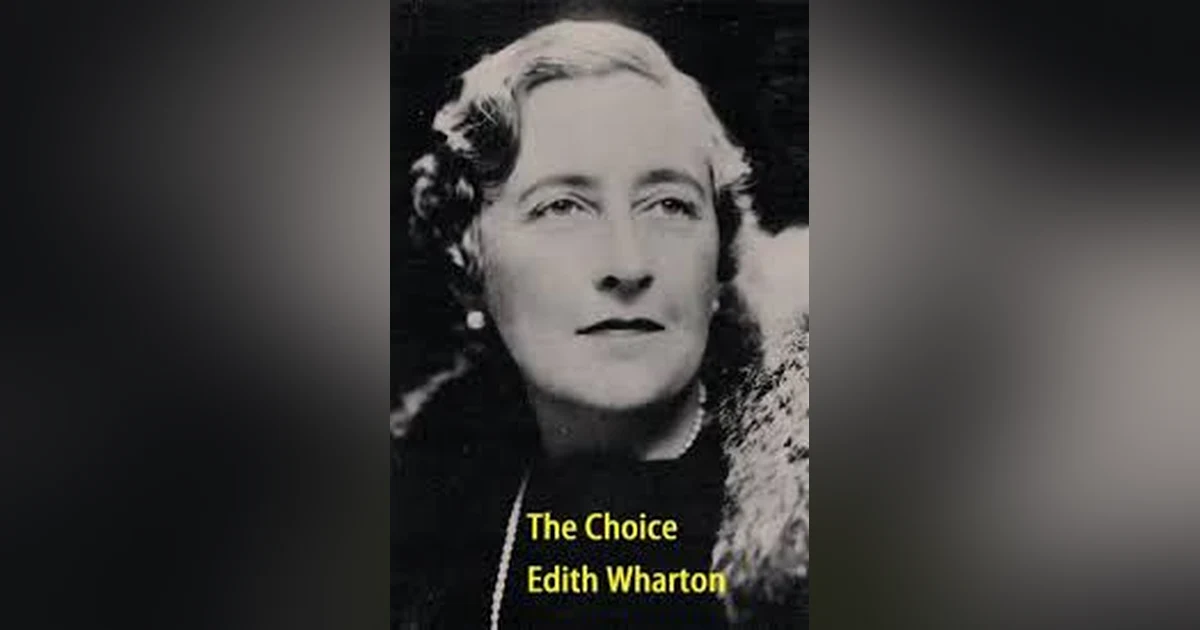


⭐ Edith Wharton’s “The Choice”
1001 Stories From the Gilded Age
Narrated by Jon Hagadorn
Tonight’s story comes from one of the towering voices of American literature — Edith Wharton, a writer whose sharp eye and elegant prose captured the social tensions, moral compromises, and emotional undercurrents of the Gilded Age better than almost anyone. Her story “The Choice” is a perfect example of that gift: a tale of wealth, pride, secrecy, and the dangerous bargains people make to preserve the lives they’ve built.
At first glance, “The Choice” seems like a domestic drama set in the comfortable world of Highfield, where Cobham Stilling — wealthy, boastful, and endlessly self‑satisfied — holds court in his grand Red House. Wharton paints him with her trademark precision: a man who “dilated and grew vast in the congenial medium of Highfield,” a local king in a small kingdom. But beneath the surface of his prosperity lies a rot — financial recklessness, vanity, and a marriage quietly suffocating under the weight of his failures.
Into this world steps Austin Wrayford, Stilling’s friend and legal adviser, and the emotional tension between Wrayford and Stilling’s wife, Isabel, gives the story its pulse. Their secret meetings, their whispered confessions, and their shared despair reveal a marriage hollowed out by neglect and a love that cannot be openly lived. Wharton’s writing is at its most incisive here, exposing the moral compromises people make when trapped between duty and desire.
The story becomes a psychological thriller when Stilling’s drunken wanderings lead him toward the boathouse — the same boathouse where Isabel and Wrayford are meeting in secret. What follows is one of Wharton’s most gripping sequences: a storm gathering, a sliding floor loosened by oil, a sudden fall into deep water, and a desperate struggle in the dark. Wharton’s line “The water’s very deep. I sometimes wish—” captures the emotional danger simmering beneath the physical one.
In the end, the story forces its characters — and its readers — to confront the consequences of their choices. Love, guilt, loyalty, and survival collide in a moment that changes everything.
⭐ Why “The Choice” Is a Perfect Fit for the Gilded Age Series
-
Wharton is the voice of the Gilded Age. Her stories dissect the era’s wealth, pretension, and social expectations with unmatched clarity.
-
The story explores the moral cost of privilege. Stilling’s extravagance, Isabel’s trapped marriage, and Wrayford’s conflicted loyalty all reflect the era’s tension between appearance and reality.
-
It blends domestic drama with psychological suspense. The boathouse scene — with its darkness, storm, and fatal misstep — is pure Wharton: elegant, tense, and devastating.
-
It reveals the emotional lives behind the era’s polished surfaces. Wharton understood that the Gilded Age glittered on the outside while many of its people lived in quiet turmoil.


