Categories
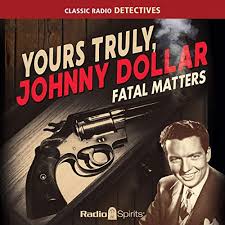
Yours Truly, Johnny Dollar
Yours Truly, Johnny Dollar is a radio drama that aired on CBS Radio from February 18, 1949 to September 30, 1962. The first several seasons imagined protagonist Johnny Dollar as a private investigator drama, with Charles Russell, Edmond O'Brien and John Lund portraying Dollar in succession over the years. In 1955 after a yearlong hiatus, the series came back in its best-known incarnation with Bob Bailey starring in "the transcribed adventures of the man with the action-packed expense account – America's fabulous freelance insurance investigator." There were 809 episodes (plus two not-for-broadcast auditions) in the 13-year run, and more than 710 still exist today. Jim Cox's book American Radio Networks: A History cites "886 total performances" which includes repeat performances.
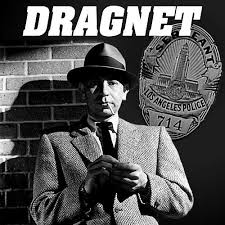
Dragnet
Friday had joined the police shortly before World War II; Ben Romero was his first partner. After Friday was discharged from the U.S. Army, he returned to the police and the pair eventually reunited in the Detective Division, prior to the events of the series. Joe Friday is a fictional character created and portrayed by Jack Webb as the lead for his series Dragnet. Friday is a detective in the Los Angeles Police Department. The character first appeared on June 3, 1949, in the premiere of the NBC radio drama that launched the series. Webb played the character on radio and later television from 1949 to 1959 and again from 1967 to 1970, also appearing as Friday in a 1954 theatrical release and a 1966 made-for-TV film.
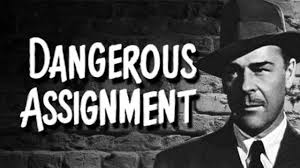
Dangerous Assignment
Dangerous Assignment was an NBC Radio drama starring Brian Donlevy broadcast in the US 1949–1953, a syndicated television series distributed in the US 1951–52 (also starring Brian Donlevy), and an Australian radio series broadcast in 1954-56 as remakes of the original American radio scripts.
Broadway's 'My Beat'
Broadway Is My Beat, a radio crime drama, ran on CBS from February 27, 1949 to August 1, 1954. The opening theme of "I'll Take Manhattan" introduced Detective Danny Clover, a hardened New York City cop who worked homicide "from Times Square to Columbus Circle—the gaudiest, the most violent, the lonesomest mile in the world."
The Man called 'X'
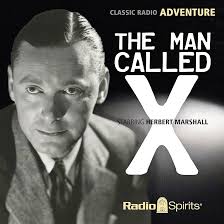
The Man Called X is an espionage radio drama that aired on CBS and NBC from July 10, 1944, to May 20, 1952. The radio series was later adapted for television and was broadcast for one season, 1956–1957.
Adventures of Philip Marlowe
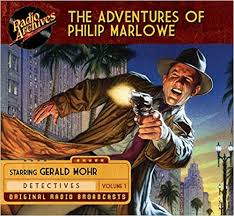
The Adventures of Philip Marlowe was a radio series featuring Raymond Chandler's private eye, Philip Marlowe. Robert C. Reinehr and Jon D. Swartz, in their book, The A to Z of Old Time Radio, noted that the program differed from most others in its genre: "It was a more hard-boiled program than many of the other private detective shows of the time, containing few quips or quaint characters."
Adventures of Sam Spade and Effie
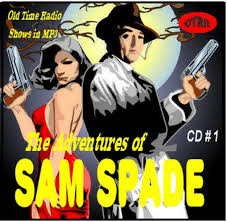
"Adventures of Sam Spade" was a suspense/detective radio drama from 1946–1951, starring Howard Duff (and later Steve Dunne) as detective Sam Spade and Lurene Tuttle as his secretary Effie Perrine. The series, which took a more lighthearted approach than the original Dashiell Hammett novel The Maltese Falcon, ran on multiple networks and featured Effie's quick wit in dialogue with Spade.
21st Precinct
21st Precinct (aka Twenty-First Precinct and Twenty First Precinct) was a police drama broadcast on CBS radio from July 7, 1953, to July 26, 1956. It was initially a summer replacement for My Friend Irma. The program was produced in cooperation with the Patrolmen's Benevolent Association of the City of New York and presented "adaptations from true criminal records in New York...from the policeman's point of view." Historically, the 21st Precinct had been located near Gramercy Park in Manhattan but in 1929 the department reorganized the precinct numbering, and the 21st designation was dropped from use. No such precinct existed during the show's run, nor does a 21st exist today. However, the fictional precinct's territory corresponds closely to that of the Upper East Side's 23rd Precinct as it has existed since 1929.
The Life of Riley
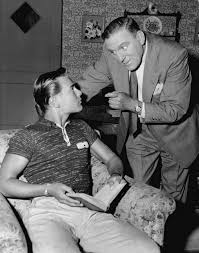
The Life of Riley starring William Bendix as lovable, blundering, Chester A. Riley, was a radio situation comedy broadcast during and after wartime 40s. Because of its overwhelming radio popularity, Riley graduated as easily to a 1949 feature film, as it did to 1950s television. Also, in 1958, it hit the newsstands, when Dell Comics released “The Life of Riley” in comic book form.
P.J. Wodehouse
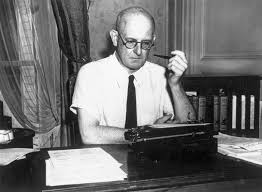
Sir Pelham Grenville Wodehouse (/ˈwʊdhaʊs/ WUUD-howss; 15 October 1881 – 14 February 1975) was an English writer and one of the most widely read humorists of the 20th century. His creations include the feather-brained Bertie Wooster and his sagacious valet, Jeeves; the immaculate and loquacious Psmith; Lord Emsworth and the Blandings Castle set; the Oldest Member, with stories about golf; and Mr. Mulliner, with tall tales on subjects ranging from bibulous bishops to megalomaniac movie moguls.
Mr. & Mrs. North
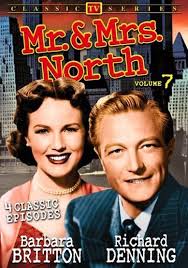
Mr. and Mrs. North are fictional American amateur detectives. Created by Frances and Richard Lockridge, the couple was featured in a series of 26 Mr. and Mrs. North novels, a Broadway play, a motion picture and several radio and television series.
Night Beat
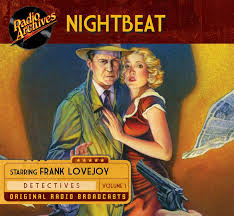
Night Beat, sometimes spelled Nightbeat, is an NBC radio drama series that aired February 6, 1950 – September 25, 1952, sponsored by Pabst Blue Ribbon Beer and Wheaties. Frank Lovejoy starred as Randy Stone, a reporter who covered the night beat for the Chicago Star, encountering criminals, eccentrics, and troubled souls. Listeners were invited to join Stone as he "searches through the city for the strange stories waiting for him in the darkness." Most episodes leaned towards suspense, crime and thriller themes, but Night Beat also featured occasional humorous or sentimental stories. Each episode ended with Stone at his desk as he finished typing a news story based on his latest exploits, and shouting for the copy boy to deliver his story to an editor.
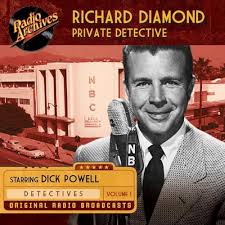
Richard Diamond PI
Dick Powell starred in the Richard Diamond, Private Detective radio series as a wisecracking former police officer turned private detective. Episodes typically open with a client visiting or calling cash-strapped Diamond's office and agreeing to his fee of $100 a day plus expenses, or Diamond taking on a case at the behest of his friend and former partner, Lt. Walter Levinson. Diamond often suffers a blow to the head in his sleuthing pursuits. Most episodes end with Diamond at the piano, singing a standard, popular song, or showtune from Powell's repertoire to Helen Asher (his girlfriend) in her penthouse at 975 Park Avenue.
The Whistler
The Whistler is an American radio mystery drama which ran from May 16, 1942, until September 22, 1955, on the west-coast regional CBS radio network. The show was also broadcast in Chicago and over Armed Forces Radio. On the West Coast of the United States, it was sponsored by the Signal Oil Company: "That whistle is your signal for the Signal Oil program, The Whistler." There were also two short-lived attempts to form east-coast broadcast spurs: July 3 to September 25, 1946, sponsored by the Campbell Soup Company; and March 26, 1947, to September 29, 1948, sponsored by Household Finance. The program was also adapted into a film noir series by Columbia Pictures in 1944.
Gunsmoke Radio
Gunsmoke is an American radio and television Western drama series created by director Norman Macdonnell and writer John Meston. It centered on Dodge City, Kansas, in the 1870s, during the settlement of the American West. The central character is lawman Marshal Matt Dillon, played by William Conrad on radio and James Arness on television.
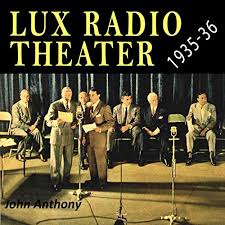
Lux Radio Theater
Lux Radio Theatre, sometimes spelled Lux Radio Theater, a classic radio anthology series, was broadcast on the NBC Blue Network (1934–35) (owned by the National Broadcasting Company, later predecessor of American Broadcasting Company [ABC] in 1943–1945); CBS Radio network (Columbia Broadcasting System) (1935–54), and NBC Radio (1954–55). Initially, the series adapted Broadway plays during its first two seasons before it began adapting films. These hour-long radio programs were performed live before studio audiences. The series became the most popular dramatic anthology series on radio, broadcast for more than 20 years and continued on television as the Lux Video Theatre through most of the 1950s. The primary sponsor of the show was Unilever through its Lux Soap brand.
31 days of Christmas Memories
Enjoy these favorite Christmas memories that have been passed down for a lifetime!
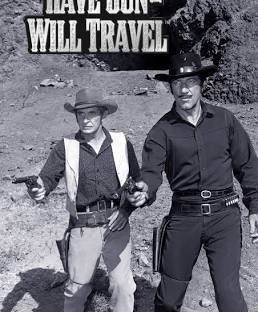
Have Gun Will Travel Radio
Have Gun – Will Travel is an American Western television series that was produced and originally broadcast by CBS on both television and radio from 1957 through 1963. The television version of the series starring Richard Boone was rated number three or number four in the Nielsen ratings every year of its first four seasons.
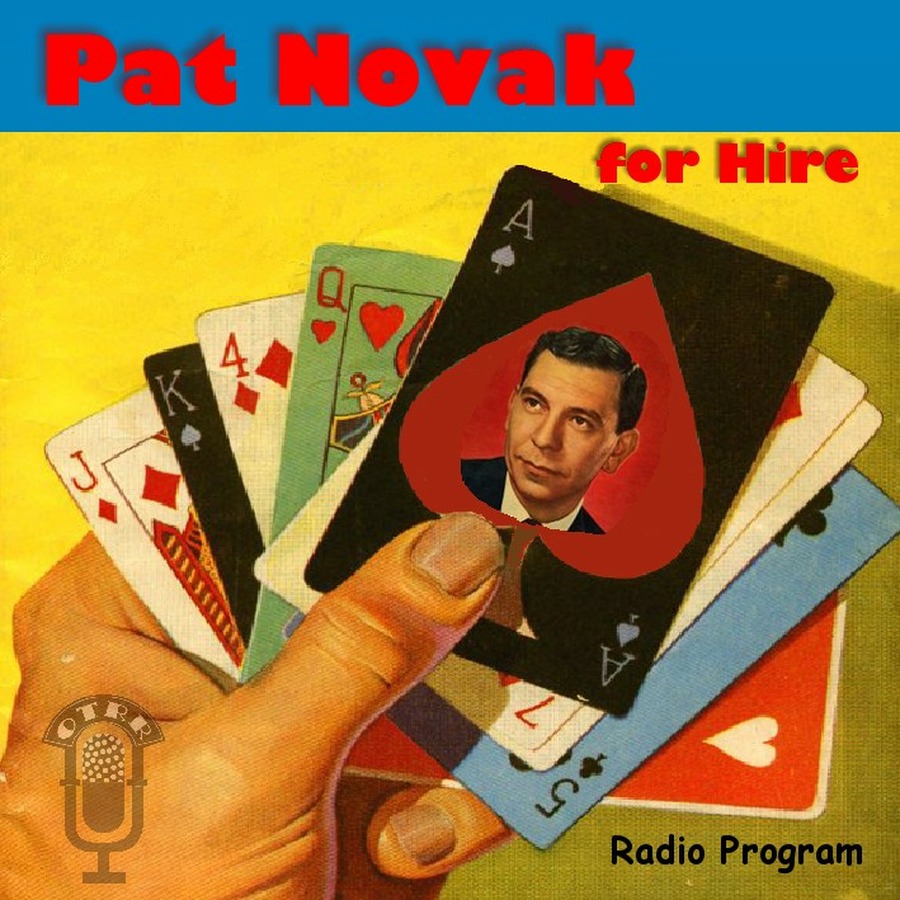
Pat Novak for Hire
Ladies and gentlemen, the American Broadcasting Company brings to its entire network one of radio's most unusual programs … Pat Novak, for Hire. Pat Novak, for Hire is set on the San Francisco waterfront and depicts the city as a dark, rough place where the main goal is survival. Novak is not a detective by trade, but he owns a boat shop on Pier 19 where he rents out boats and does odd jobs to make money.
Tarzan, Lord of the Jungle
As told in the Tarzan book series, the episodes centered around young Lord Greystoke, who was raised by a female ape as Tarzan, Lord of the Jungle, and Jane Parker, a girl who was separated from a safari. Vincent Terrace wrote in his book, Radio Programs, 1924-1984: A Catalog of More Than 1800 Shows, "Stories relate Tarzan's efforts to protect his adopted homeland from evildoers." Producers of the transcribed programs added a touch of authenticity by going to zoos to record sounds of jungle animals and then using those sounds in appropriate places in episodes.
What's my Line?
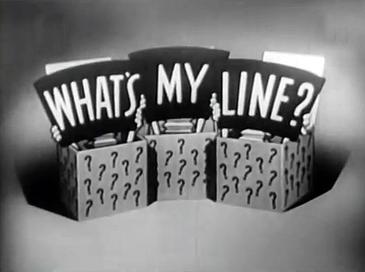
What's My Line? is a panel game show that originally ran in the United States, between 1950 and 1967, on CBS, originally in black and white and later in color, with subsequent American revivals. The game uses celebrity panelists to question contestants in order to determine their occupation. The majority of the contestants were from the general public, but there was one weekly celebrity "mystery guest" for whom the panelists were blindfolded.
Barrie Craig, Confidential Investigator
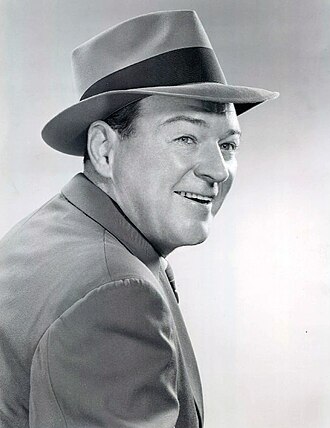
Barrie Craig, Confidential Investigator was a detective drama heard on NBC Radio from October 3, 1951 to June 30, 1955 Detective Barrie Craig (William Gargan) worked alone from his Madison Avenue office. Unlike his contemporaries Sam Spade and Philip Marlowe, Craig had a laid-back personality, somewhat cutting against the popular hard-boiled detective stereotype. Others in the cast included Ralph Bell, Elspeth Eric, Parker Fennelly, Santos Ortega, Arnold Moss, Parley Baer, Virginia Gregg and Betty Lou Gerson. Don Pardo was the announcer. The program was broadcast on Wednesdays at 10 p.m. Eastern Time. Writers included John Roeburt.
Soldiers of the Press
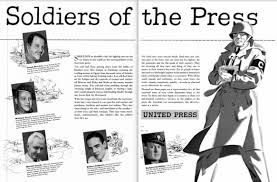
Soldiers of the Press was a weekly radio drama series created by the United Press news agency during World War II to promote its correspondents and news service. Each 15-minute episode dramatized a correspondent's experiences on the front lines, using professional actors and sound effects to bring the stories to life for the homefront audience. The series was offered free to stations subscribing to the news service and aired between 1942 and 1945, serving as a form of public relations for the United Press
Gang Busters
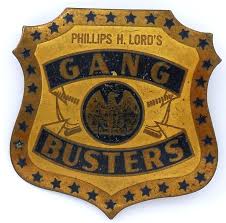
Gang Busters is an American dramatic radio program heralded as "the only national program that brings you authentic police case histories." It premiered on January 15, 1936 and was broadcast for more 21 years through November 27, 1957. Magazines of the true crime variety were highly popular in the 1930s and the film G Men starring James Cagney, released in the spring of 1935, found a large audience. Producer-director Phillips H. Lord believed that there was a place on radio for a show of the same type. To emphasize the authenticity of his dramatizations, Lord produced the initial radio show, G-Men, in close association with FBI director J. Edgar Hoover, who was not favorable to the idea of such a program, but U. S. attorney general Homer Stille Cummings contributed his full support.