Categories
The Chase and Sanborn Hour
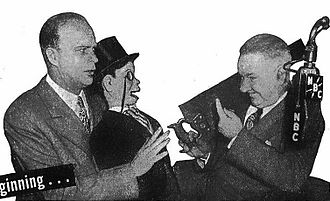
The Chase and Sanborn Hour is the umbrella title for a series of American comedy and variety radio shows sponsored by Standard Brands' Chase and Sanborn Coffee, usually airing Sundays on NBC from 8 p.m. to 9 p.m. during the years 1929 to 1948. The series began in 1929 as The Chase and Sanborn Choral Orchestra, a half-hour musical variety show heard Sundays at 8:30 p.m. on NBC. When Maurice Chevalier became the show's star, he received a record-breaking salary of $5,000 a week. Violinist David Rubinoff (1897–1986) became a regular in January 1931, introduced as "Rubinoff and His Violin."
Mail Call
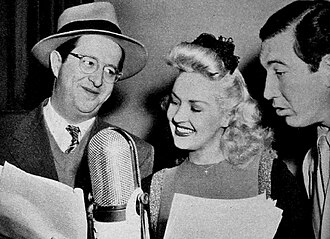
Mail Call was an American radio program that entertained American soldiers from 1942 until 1945, during World War II. Lt. Col. Thomas A.H. Lewis (commander of the Armed Forces Radio Service) wrote in 1944, "The initial production of the Armed Forces Radio Service was 'Mail Call,' a morale-building half hour which brought famed performers to the microphone to sing and gag in the best American manner." The program featured popular entertainers of that day, such as Bob Hope, Bing Crosby, Judy Garland, and Dinah Shore, performing musical numbers and comedy skits to boost the morale of soldiers stationed far from their homes. Lewis added, "To a fellow who has spent months guarding an outpost in the South Seas, Iceland or Africa a cheery greeting from a favorite comedian, a song hit direct from Broadway, or the beating rhythm of a hot band, mean a tie with the home to which he hopes soon to return.
This is Your FBI
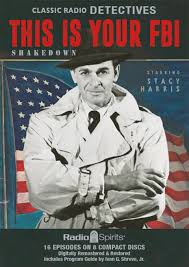
This Is Your FBI is a radio crime drama broadcast in the United States on ABC from April 6, 1945, to January 30, 1953, for a total of 409 shows. FBI chief J. Edgar Hoover gave it his endorsement, calling it "the finest dramatic program on the air". Dramatizations of FBI cases were narrated by Frank Lovejoy, Dean Carleton and William Woodson. Lawrence MacArthur wrote the episodes. This Is Your FBI was sponsored during its entire run by the Equitable Life Assurance Society of the United States.
Bob Hope's 'The Pepsodent Show'
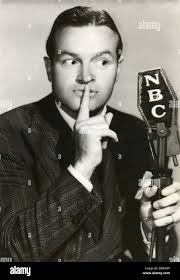
The Pepsodent Show is an American radio comedy program broadcast from 1938 to 1948, during the Golden Age of Radio. The program starred Bob Hope and Jerry Colonna, alongside Blanche Stewart, Elvia Allman, and a continuously rotating supporting cast of actors and musicians which included, for a time, Judy Garland, Frances Langford, and Desi Arnaz and his orchestra.

The Twilight Zone
The Twilight Zone is a nationally syndicated radio drama series featuring radio play adaptations of the classic 1959–1964 television series The Twilight Zone. The series was produced for the British digital radio station BBC Radio 4 Extra airing for 176 episodes between October 2002 and 2012. In the United States, it aired on nearly 200 radio stations including WCCO, KSL, KOA, WIND, XM Satellite Radio channel 163 and Sirius XM Book Radio. Most of the stations aired two episodes each week, usually on the weekends and many times back to back.
John Chapman
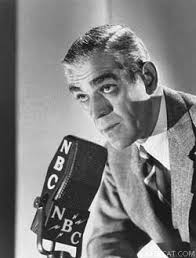
"On Borrowed Time" was featured as a dramatic adaptation on the NBC radio anthology series Best Plays, hosted by New York's Daily News drama critic John Chapman. The program, which aired in the early 1950s, showcased celebrated theatrical works, and "On Borrowed Time" was broadcast during its run.
Father Knows Best
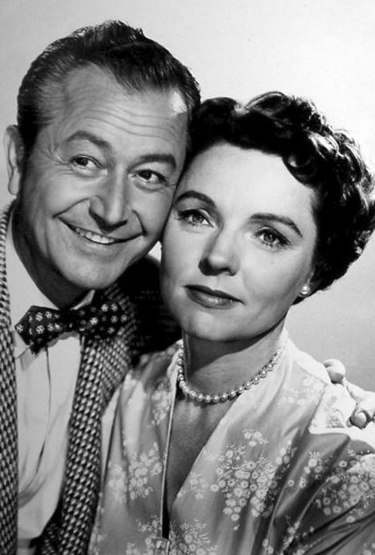
Father Knows Best is an American sitcom starring Robert Young, Jane Wyatt, Elinor Donahue, Billy Gray and Lauren Chapin. The series, which began on radio in 1949, aired as a television show for six seasons and 203 episodes. Created by Ed James, Father Knows Best follows the lives of the Andersons, a middle-class family living in the town of Springfield. The state in which Springfield is located is never specified, but it is generally accepted to be located in the Midwestern United States. The television series debuted on CBS in October 1954. It ran for one season and was canceled by CBS but picked up by NBC, where it remained for three seasons. After cancellation by NBC in 1958, the series returned to CBS, where it aired until May 1960.
You Bet Your Life
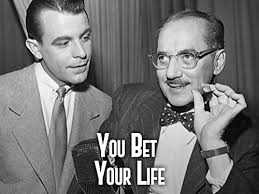
You Bet Your Life is an American comedy quiz series that has aired on both radio and television. The original version was hosted by Groucho Marx of the Marx Brothers, with announcer and sidekick George Fenneman. The show debuted on ABC Radio on October 27, 1947, moved to CBS Radio debuting October 5, 1949, and went to NBC-TV and NBC Radio on October 4, 1950. Because of its simple format, it was possible to broadcast the show on both radio and television but not simultaneously. Many of the laughs on the television show were evoked by Groucho's facial reactions and other visual gimmicks, so the two versions were slightly different. The last episode in a radio format aired on June 10, 1960. The series continued on television for another year, recording the last season, beginning on September 22, 1960, with a new title, The Groucho Show.
Adventures of Horatio Hornblower
The Adventures of Horatio Hornblower was a 52-episode, 30-minute radio series produced by Harry Towers and starring Michael Redgrave as Horatio Hornblower that originally aired in 1952 on Radio Luxembourg before being broadcast in the United States by CBS, ABC, and the Mutual Broadcasting System through 1957. The series followed the career of C.S. Forester's character from a junior officer to a full Admiral of the Fleet during the Napoleonic Wars.
Cloak & Dagger
Cloak and Dagger is an NBC radio series, a foreign intrigue adventure adapted from the book Cloak and Dagger by Corey Ford and Alistair McBain. Ford also was host of the series. Cloak and Dagger was broadcast from May 7 to October 22, 1950, as part of "a mystery block with several other shows of far inferior quality". The program was sustaining for all 22 episodes.
The Adventures of Philo Vance
The Adventures of Philo Vance was an old-time radio drama series centered on the wealthy, cultured detective Philo Vance, created by S. S. Van Dine. The character appeared on radio in at least three distinct series, with starring roles for John Emery (1943-1945), José Ferrer (1945), and most prominently, Jackson Beck (1948–1950). The later Ziv syndication starring Jackson Beck as Vance is the most well-known and has the most surviving episodes.
Zero Hour with Rod Serling
The radio series debuted on September 3, 1973, in syndication, and was picked up by the Mutual Broadcasting System in December. The original format featured five-part dramas broadcast Monday through Friday with the story coming to a conclusion on Friday. Including commercials, each part was approximately 30 minutes long. Mutual affiliates were free to broadcast the series in any available time slot that they wished.
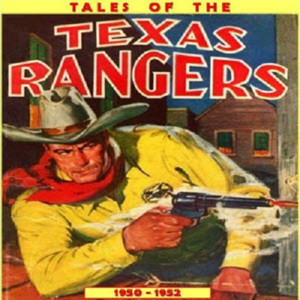
Tales of the Texas Rangers
Dramatizations based on the files of the Texas Rangers, North America's oldest law enforcement organization. Stories detail the investigations of Rangers Jace Pearson and Clay Morgan.
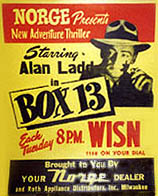
Box 13
To seek out new ideas for his fiction, Holiday ran a classified ad in the Star-Times newspaper where he formerly worked: "Adventure wanted, will go anywhere, do anything – write Box 13, Star-Times". The stories followed Holiday's adventures when he responded to the letters sent to him by such people as a psycho killer and various victims.
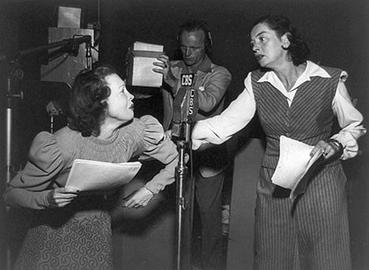
Suspense
Suspense is a radio drama series broadcast on CBS Radio from 1940 through 1962. One of the premier drama programs of the Golden Age of Radio, it was subtitled "radio's outstanding theater of thrills" and focused on suspense thriller-type scripts, usually featuring leading Hollywood actors of the era. Approximately 945 episodes were broadcast during its long run, and more than 900 still exist. Suspense went through several major phases, characterized by different hosts, sponsors, and director/producers. Formula plot devices were followed for all but a handful of episodes: the protagonist was usually a normal person suddenly dropped into a threatening or bizarre situation; solutions were "withheld until the last possible second"; and evildoers were usually punished in the end.
The Jack Benny Program
The Jack Benny Program, starring Jack Benny, is a radio and television comedy series. The show ran for over three decades, from 1932 to 1955 on radio, and from 1950 to 1965 on television. It won numerous awards, including the 1959 and 1961 Emmy Awards for Best Comedy Series, and is generally regarded as a high-water mark in 20th-century American comedy.
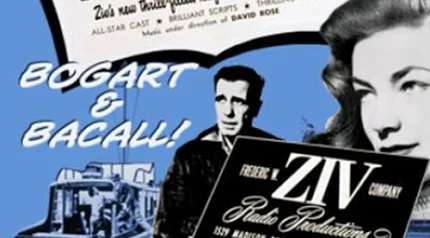
Bold Venture
Salty seadog Slate Shannon (Bogart) owns a Cuban hotel, Shannon's Place, sheltering an assortment of treasure hunters, revolutionaries, and other shady characters. With his sidekick and ward, the sultry Sailor Duval (Bacall), tagging along, he encounters modern-day pirates and other tough situations while navigating the waters around Havana. Aboard his boat, the Bold Venture, Slate and Sailor experience "adventure, intrigue, mystery and romance in the sultry settings of tropical Havana and the mysterious islands of the Caribbean."
Casey Crime Photographer
Casey, Crime Photographer, known by a variety of titles on radio (aka Crime Photographer, Flashgun Casey, Casey, Press Photographer) was a media franchise from the 1930s to the 1960s. The character was the creation of novelist George Harmon Coxe. Casey was featured in the pulp magazine, Black Mask, novels, comic books, radio, film, television and legitimate theatre. Jack "Flashgun" Casey, was a crime photographer for the newspaper The Morning Express. With the help of reporter Ann Williams, he solved crimes and recounted his stories to Ethelbert the bartender (portrayed by John Gibson) and other friends at the Blue Note Cafe, their favorite tavern and jazz club where the Archie Bleyer Orchestra and the Teddy Wilson Trio were featured. The role of Ann Williams was portrayed throughout most of the run of the series (as well as the Casey, Crime Photographer television series) by Jan Miner, perhaps best remembered as "Madge" the manicurist on Palmolive's television soap commercials fro…
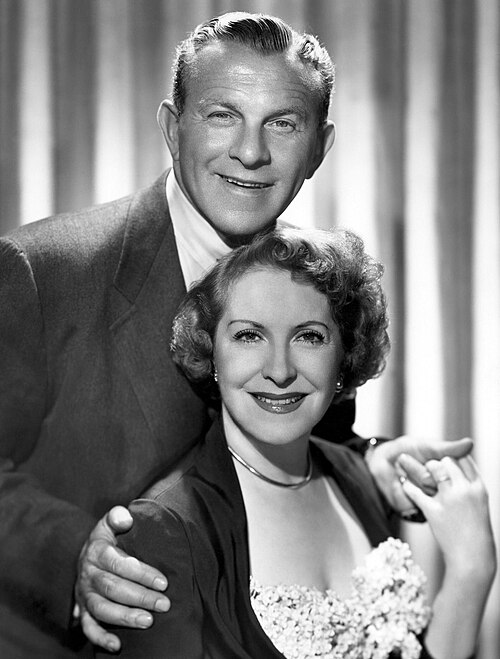
The Burns and Allen Show
Burns and Allen were an American comedy duo consisting of George Burns and his wife Gracie Allen. They worked together as a successful comedy team that entertained vaudeville, film, radio, and television audiences for over forty years. The duo met in 1922 and married in 1926. Burns played the straight man and Allen played a silly, addle-headed woman whose convoluted logic Burns was often ill-equipped to challenge. The duo starred in a number of films, including Lambchops (1929), The Big Broadcast (1932) its two sequels (1935 and 1936), and A Damsel in Distress (1937). Their 30-minute radio show debuted in September 1934 as The Adventures of Gracie, whose title changed to The Burns and Allen Show in 1936; the series ran, moving back and forth between NBC and CBS, until May 1950. After their radio show's cancellation, Burns and Allen reemerged on television with a popular sitcom, which ran from 1950 to 1958.
CBS Mystery Theater
CBS Radio Mystery Theater (a.k.a. Radio Mystery Theater and Mystery Theater, sometimes abbreviated as CBSRMT) is a radio drama series created by Himan Brown that was broadcast on CBS Radio Network affiliates from 1974 to 1982, and later in the early 2000s was repeated by the NPR satellite feed. In New York City it was not aired by the then all-news WCBS but by its originating station, WOR, which produced and announced it as simply Radio Mystery Theater.
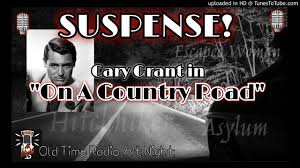
On a Country Road
Cary Grant stars in this classic episode that has an interesting history: it’s by a one-hit-wonder writer who became a prominent journalist. Grant gives his usual fine performance. The story was disconcerting to many listeners because hitch-hiking was a common practice at the time, and there were always warnings about being careful about picking up riders. Also, stories about a car breakdown as a precursor to a violent crime or attack, was not all that common as plotlines. Those kinds of stories became more common in later decades. Cars were not as reliable as they are in these years, and required constant attention to maintenance, and there was great concern about having a breakdown in an unfamiliar area, far from a pay phone, or some kind of retail business that might be able to call for help. That means, this story generated more shudders in the 1950 audience than it would today with more modern vehicles, GPS-capable smartphones, and phones in general.