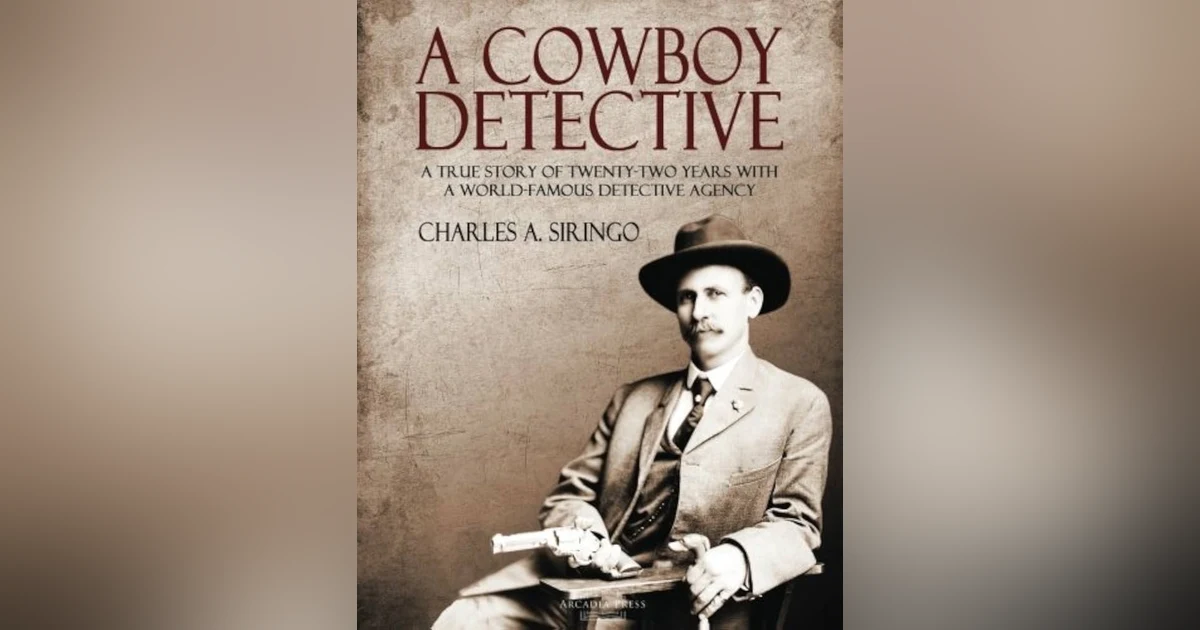
A COWBOY DETECTIVE (CHAP 13) by CHARLIE SIRINGO


⭐ 1001 Stories From the Old West
SHOW NOTES — A Cowboy Detective, Chapter 13
“The Murderer Who Smiled”
Episode Summary
Chapter 13 of Charlie Siringo’s A Cowboy Detective is one of the most unsettling and revealing chapters in the entire book — a story that strips away every romantic notion of the Old West and shows us the frontier as it truly was: too much land, too few lawmen, and far too many places for evil to hide.
In this chapter, Siringo moves from a tense undercover job in Colorado straight into one of the most disturbing murder cases of his career — the killing of old Mr. Baily, a Civil War veteran, by a sweet‑faced 17‑year‑old drifter named Ernest Bush. What begins as a missing‑person search quickly becomes a nightmare of deception, manipulation, and cold‑blooded violence.
Bush, barely out of childhood, fools an entire Nebraska courtroom with his innocent looks. Women in the gallery throw their arms around him and kiss him after the judge dismisses the case for lack of evidence. The prosecutor is humiliated. The town is convinced they’ve witnessed a miscarriage of justice — but they don’t know the half of it.
Siringo does.
And what follows is one of the most chilling undercover operations in frontier history.
🔥 Inside the Case: The Murder of Mr. Baily
Siringo arrives in Benkelman, Nebraska disguised as a cowboy drifter. His job: win the trust of Ernest Bush, who is suspected of murdering Mr. Baily — a kindly old soldier who had taken the boy into his home and even shared his bed to keep him warm.
Bush’s story is simple: He doesn’t know what happened. He hasn’t seen Baily since noon. He’s just a poor kid trying to get by.
The town believes him. The judge believes him. The women in the courtroom adore him.
But Siringo sees something else — a darkness behind the boy’s eyes.
And when Bush finally confesses, the truth is horrifying.
He shot Baily in the head with buckshot from a hidden position in the hog pen. He dragged the body behind a horse, dumped it under the ice, burned evidence, hid the money, and even staged the crime scene to mislead investigators. He then calmly fed the livestock and waited for the search party to find the body.
This wasn’t a moment of panic. It wasn’t a crime of passion. It was premeditated murder committed by a teenager who enjoyed the thrill of killing.
⚠️ The Old West Was Not a Myth — It Was a Warning
Chapter 13 reveals the true Old West — not the Hollywood version, but the one Siringo lived:
-
Lawmen were scarce. A single sheriff might cover hundreds of miles of open prairie.
-
Criminals drifted freely. A murderer could vanish into the plains and reappear under a new name two counties over.
-
Communities were isolated. A rancher might be the only authority figure for miles.
-
Justice was fragile. A judge’s ruling could set a killer free simply because evidence was hard to gather in a land without forensics.
-
Appearances deceived. A baby‑faced 17‑year‑old could be the most dangerous man in the county.
Siringo saw it all — the honest sheriffs, the corrupt officials, the killers who walked free, and the innocent men who were nearly hanged. He lived in a world where justice depended on cunning, courage, and luck… and where injustice was often rewarded with applause.
🎙️ What Makes This Chapter Unforgettable
-
The psychological tension of Siringo living side‑by‑side with a murderer who might kill him in his sleep.
-
The chilling confession, delivered casually by a boy who dreams of joining an outlaw gang.
-
The courtroom reversal, where a killer is kissed by admiring women after being set free.
-
The undercover brilliance of Siringo, who manipulates Bush into revealing every detail of the crime.
-
The final twist, where Bush nearly murders Siringo after reading his valise — convinced he’s a detective.
This is frontier justice at its rawest — unpredictable, dangerous, and deeply human.
🤠 Why Siringo’s Stories Matter
Charlie Siringo wasn’t just a detective — he was a witness to the real Old West. His memoirs show us:
-
how criminals thought
-
how lawmen worked
-
how justice was improvised
-
how easily evil could hide behind a smile
-
how vast and lawless the frontier truly was
Chapter 13 is a perfect example of why Siringo’s work remains essential reading. He didn’t chase legends — he chased real killers. And he paid for it with sleepless nights, close calls, and the constant threat of violence.
🎧 If You Enjoy This Episode…
Be sure to check out our sister show True Crime From Another Time, where we cover historical murders and investigations from across America — including frontier cases like the Espinosa Brothers, the murder of Julia Bulette, and other forgotten crimes that shaped the West.
And stay tuned here at 1001 Stories From the Old West, where we continue our chapter‑by‑chapter coverage of A Cowboy Detective — one of the most gripping, authentic, and eye‑opening accounts of frontier justice ever written.


